



This post may contain affiliate links which means we may receive a commission for purchases made through links. Read more on our Privacy Policy.
The Complete Expert Guide to Jackery Portable Solar Panel
In today’s world, reliable portable energy is no longer just convenient—it’s essential. Whether you’re an outdoor enthusiast, a professional working in remote locations, or someone preparing for emergency situations, a jackery portable solar panel offers a flexible and sustainable solution. These panels convert sunlight into electricity, providing off-grid power for devices, appliances, and backup systems.
This guide will provide comprehensive advice on setup, usage, and maintenance. Following these recommendations ensures you maximize energy output and extend the lifespan of your panel. The tips are based on expert insights and real-world usage, making this guide both credible and actionable.
Table of Contents
Why a Jackery Portable Solar Panel Is Worth the Investment

Portable solar panels are increasingly popular because they combine efficiency, convenience, and sustainability. Unlike stationary solar panels, a jackery portable solar panel can be deployed anywhere, making it ideal for:
- Outdoor recreation, including camping, hiking, and road trips
- Emergency preparedness during power outages
- Remote fieldwork or scientific research
- Sustainable living setups, like tiny homes or off-grid cabins
By pairing a jackery portable solar panel with a compatible power station, you can store energy for later use. This feature makes it an excellent tool for both short-term outdoor use and long-term energy planning.
How Jackery Portable Solar Panels Work
Understanding how these panels generate power is crucial for effective usage.
Photovoltaic Technology
The core component of a jackery portable solar panel is its photovoltaic (PV) cells. These semiconducting cells convert sunlight into direct current (DC) electricity. Multiple cells are arranged in a compact, foldable design, allowing for portability without compromising efficiency.
Energy Flow
The process of converting sunlight into usable power follows a simple sequence:

- Sunlight hits the panel’s surface.
- PV cells generate DC electricity.
- Electricity flows through cables into a power station or compatible device.
- Stored energy is available for later use, even during nighttime or cloudy weather.
By understanding this process, users can position their panels and manage power storage more effectively.
Key Benefits of a Jackery Portable Solar Panel
A jackery portable solar panel offers numerous advantages over traditional power sources and even other portable solar solutions.
Renewable and Clean Energy
Solar power is a sustainable, eco-friendly energy source. Using a jackery portable solar panel reduces reliance on fossil fuels and helps lower your carbon footprint. It’s a small but meaningful step toward sustainable energy consumption.
Portability and Ease of Use
Foldable and lightweight, the jackery portable solar panel can be transported easily. Whether it’s packed into a backpack for a day hike or set up at a remote campsite, these panels provide energy where it’s needed most.
Cost Savings
Once installed, the panel generates free electricity. This eliminates fuel costs associated with traditional generators and reduces dependency on expensive portable battery packs. Over time, the savings can be significant.
Expandable Power Systems
Many models allow users to connect multiple panels or pair them with larger power stations. This modularity enables powering more devices or running appliances that require higher wattage.
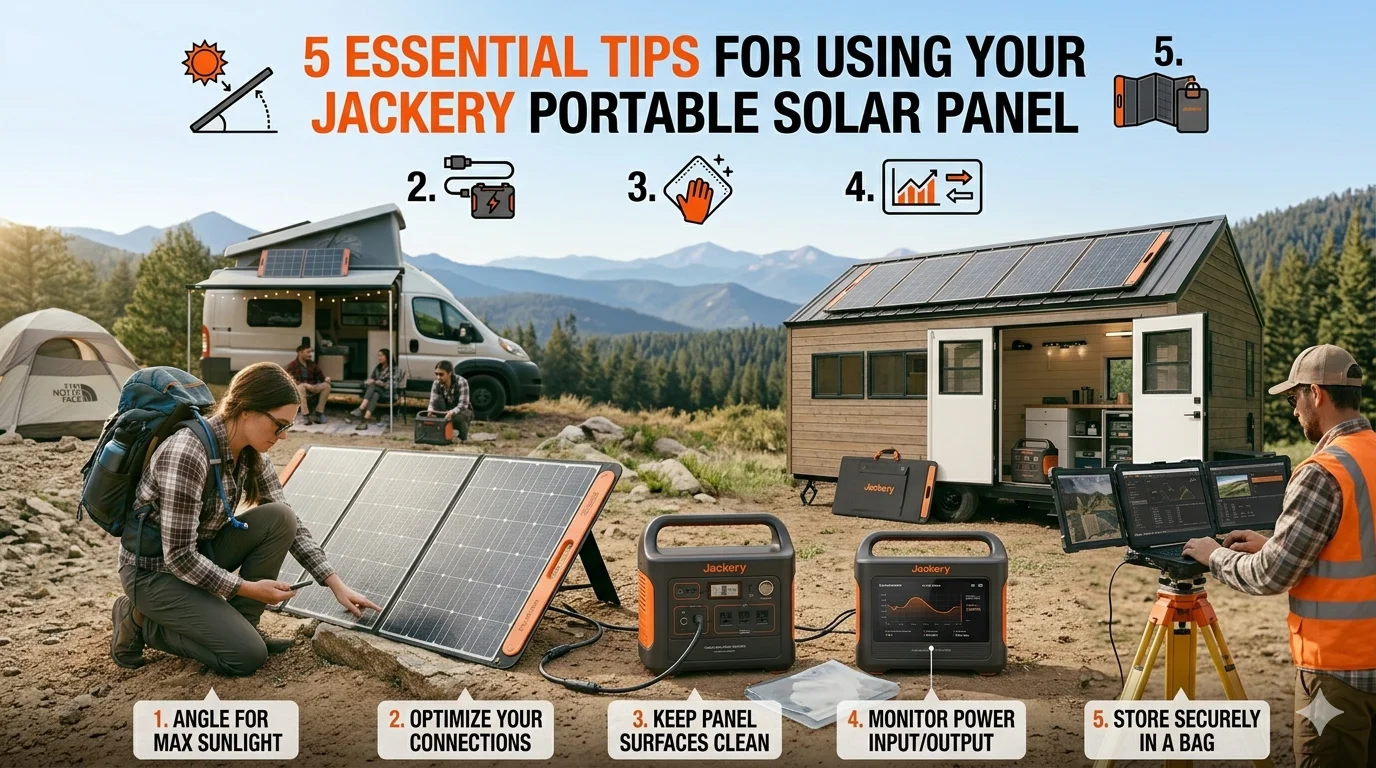
5 Essential Tips for Using Your Jackery Portable Solar Panel
To get the most out of your portable solar panel, follow these five practical tips:

1. Position the Panel for Maximum Sunlight
Correct placement significantly affects performance. Always position your jackery portable solar panel in direct sunlight, adjusting the angle to follow the sun during peak hours (10 AM–2 PM). Avoid shaded areas, including spots near trees, buildings, or vehicles. Even partial shade can drastically reduce power output.
2. Pair with a Compatible Power Station
A panel alone cannot store energy. Always connect the panel to a compatible Jackery power station or battery. This allows energy to be stored for use during nighttime or cloudy days, ensuring a continuous power supply. Pairing also enables simultaneous charging of multiple devices without overloading the system.
3. Keep the Panel Clean
Dust, dirt, and debris block sunlight and reduce efficiency. Clean your jackery portable solar panel regularly with a soft, damp cloth. Avoid abrasive cleaning tools or chemicals that could damage the delicate photovoltaic cells. Regular maintenance ensures the panel operates at peak efficiency.
4. Monitor Power Input and Output
Most Jackery panels and power stations feature a display showing input wattage and battery levels. Regularly monitoring this information ensures the panel is generating energy properly and helps detect potential issues such as loose connections or damaged cables.
5. Store and Handle with Care
Even rugged portable panels can be damaged if mishandled. Fold the panel when not in use and store it in a cool, dry location. Avoid prolonged exposure to extreme heat, rain, or snow, which could shorten the panel’s lifespan. Careful handling preserves its performance and durability.
Choosing the Right Jackery Portable Solar Panel
Selecting the appropriate panel depends on your power needs and intended usage.
Solar Efficiency and Wattage
Panels come in a range of wattages, from 60W to 200W or higher. Higher wattage panels generate more power, which is essential if you intend to charge multiple devices or run larger appliances. Efficiency ratings indicate how well the panel converts sunlight into electricity, a crucial factor for cloudy or low-light conditions.
Durability and Design
Outdoor use demands panels that are weather-resistant and built to last. Look for rugged casings and reinforced edges. A jackery portable solar
panel designed for harsh conditions ensures reliable performance during camping, hiking, or fieldwork.
Connectivity and Compatibility
Check that the panel easily connects to your devices or power station. Most Jackery panels offer standard USB or DC outputs for simple plug-and-play usage. Ensuring compatibility simplifies energy management and avoids unnecessary adapters.
Practical Applications
Outdoor Recreation
Hikers, campers, and van-lifers rely on jackery portable solar panels to power phones, cameras, GPS units, and LED lighting. They offer a quiet, eco-friendly alternative to generators, especially in protected natural areas.
Emergency Preparedness
During power outages, a portable solar panel is invaluable. A jackery portable solar panel can power phones, radios, medical equipment, and lighting, providing safety and peace of mind when the grid is down.

Remote Work
Field professionals—surveyors, researchers, or construction managers—often need reliable energy in locations without access to electricity. A jackery portable solar panel supplies power for laptops, tools, and communication devices.
Sustainable Living
Tiny homes, off-grid cabins, and eco-communities use portable solar panels to supply energy for appliances and lighting. Combining multiple panels with a power station provides consistent off-grid energy while minimizing environmental impact.
Maintenance and Longevity
Proper care extends the life of your solar panel and maximizes efficiency.
- Inspect Connections Regularly: Check cables, connectors, and input ports to prevent power loss.
- Clean Panels Frequently: Dust, leaves, or bird droppings can reduce output.
- Store Correctly: Fold panels and keep them in a dry, cool place when not in use.
- Protect From Harsh Conditions: Avoid leaving panels exposed to prolonged rain, snow, or extreme heat.
With proper care, a jackery portable solar panel can last over a decade, providing years of reliable energy.
Frequently Asked Questions
Do I Need a Power Station?
Yes. Panels generate power but cannot store it. Pairing with a Jackery power station allows energy storage for later use.
Can I Use the Panel in Cloudy Weather?
Yes, although output is lower. Panels still produce power under diffuse sunlight, making them useful even on overcast days.
Are Portable Solar Panels Water-Resistant?
Most models are water-resistant. Always check the IP rating for your specific model and avoid submersion.
What Is the Expected Lifespan?
With proper use and maintenance, a jackery portable solar panel can last 10–15 years, depending on environmental conditions and frequency of use.
Conclusion
A jackery portable solar panel is a versatile, eco-friendly, and cost-effective solution for reliable off-grid power. Whether you’re camping, preparing for emergencies, working remotely, or creating a sustainable living setup, following the essential tips provided in this guide ensures optimal performance and longevity.
Proper placement, pairing with a power station, regular cleaning, careful handling, and monitoring power flow are key practices that turn a portable solar panel into a dependable energy resource. By implementing these strategies, you can enjoy years of uninterrupted, clean energy while minimizing environmental impact.