



This post may contain affiliate links which means we may receive a commission for purchases made through links. Read more on our Privacy Policy.
Essential Factors You Should Know Before Starting a Solar Panel Installation
Switching to renewable energy is no longer just a passing trend—it’s a smart, long-term investment for homeowners looking to reduce costs and environmental impact. However, a successful solar panel installation involves much more than simply placing panels on a roof. The difference between a system that performs efficiently and one that falls short often comes down to proper planning, thoughtful design, and expert execution.
If you’re considering a solar panel installation, it’s important to understand the key factors before making a commitment. Having the right knowledge early on can help you avoid unnecessary expenses and ensure your system delivers reliable performance for years to come.
Why Planning Matters Before Installation
A well-executed solar panel installation starts long before any equipment is delivered to your property. It involves a careful assessment of your home, including roof condition, positioning, and your household’s energy consumption patterns. Without this groundwork, even the most advanced system may fail to meet expectations.
Jumping into a solar panel installation based solely on low pricing or attractive promotions can lead to issues such as reduced efficiency, safety concerns, and costly repairs later on. Taking the time to plan properly ensures that your investment is both effective and sustainable over the long term.
Table of Contents
1. Is Your Roof Suitable for Solar Panel Installation?
Your roof is one of the most important factors in determining how effective your system will be. Before moving forward with a solar panel installation, it’s essential to assess whether your roof can support optimal energy production.
Roof Suitability for Solar Installation
| Feature | Ideal (Best Performance) ✅ | Sub-Optimal (Challenging) ❌ |
| Orientation | South-facing (Northern Hemisphere) or North-facing (Southern Hemisphere) for peak sun exposure. | North-facing (in the Northern Hemisphere) which stays in the shade most of the day. |
| Roof Shape | Large, open rectangular surfaces with no obstructions (chimneys, vents, or skylights). | Complex geometry with many gables, hips, valleys, or small triangular sections. |
| Roof Pitch | Standard slope (30° to 40°) which allows for natural cleaning and optimal sun angle. | Flat roofs (require extra racking) or Steep slopes (dangerous/expensive to install). |

Realistic Visual Comparison
Imagine looking at two different houses in a neighborhood:
House A: The “Solar-Ready” Home ✅
- Roof: A simple, wide gable roof facing directly South.
- Visual: The surface is a clean, flat plane of asphalt shingles or metal. There are no chimneys or dormer windows breaking up the space.
- Result: A massive, uniform grid of 20+ panels fits perfectly, maximizing the energy you get for every dollar spent.
House B: The “Complex” Home ❌
- Roof: A “McMansion” style roof with multiple peaks, valleys, and several small dormer windows.
- Visual: The roof faces many different directions (North, East, West). Large trees cast shadows over half the surface by 2:00 PM.
- Result: Panels must be split into small groups of 2 or 3. High labor costs because installers have to navigate “tight corners,” and much lower total energy production.
2. The Impact of Shade on Solar Panel Installation
Shade is one of the biggest factors that can limit the efficiency of a solar panel installation.
Even small amounts of shading—from trees, chimneys, or nearby structures—can significantly reduce energy production. In some situations, just one shaded panel can affect the output of the entire system, making proper placement and planning essential.

Solutions for Shading
Fortunately, there are ways to reduce the impact. Modern systems often use technologies like power optimizers and microinverters, which allow panels to operate more independently. This helps maintain performance even when part of the array is shaded. In some cases, installers may also suggest adding extra panels to balance out potential energy losses.
3. Roof Type and Mounting Systems
Not all roofs are the same, and the type you have will influence how the system is installed. A well-planned solar panel installation takes these differences into account to ensure both safety and long-term performance.
Tiled or Slate Roofs
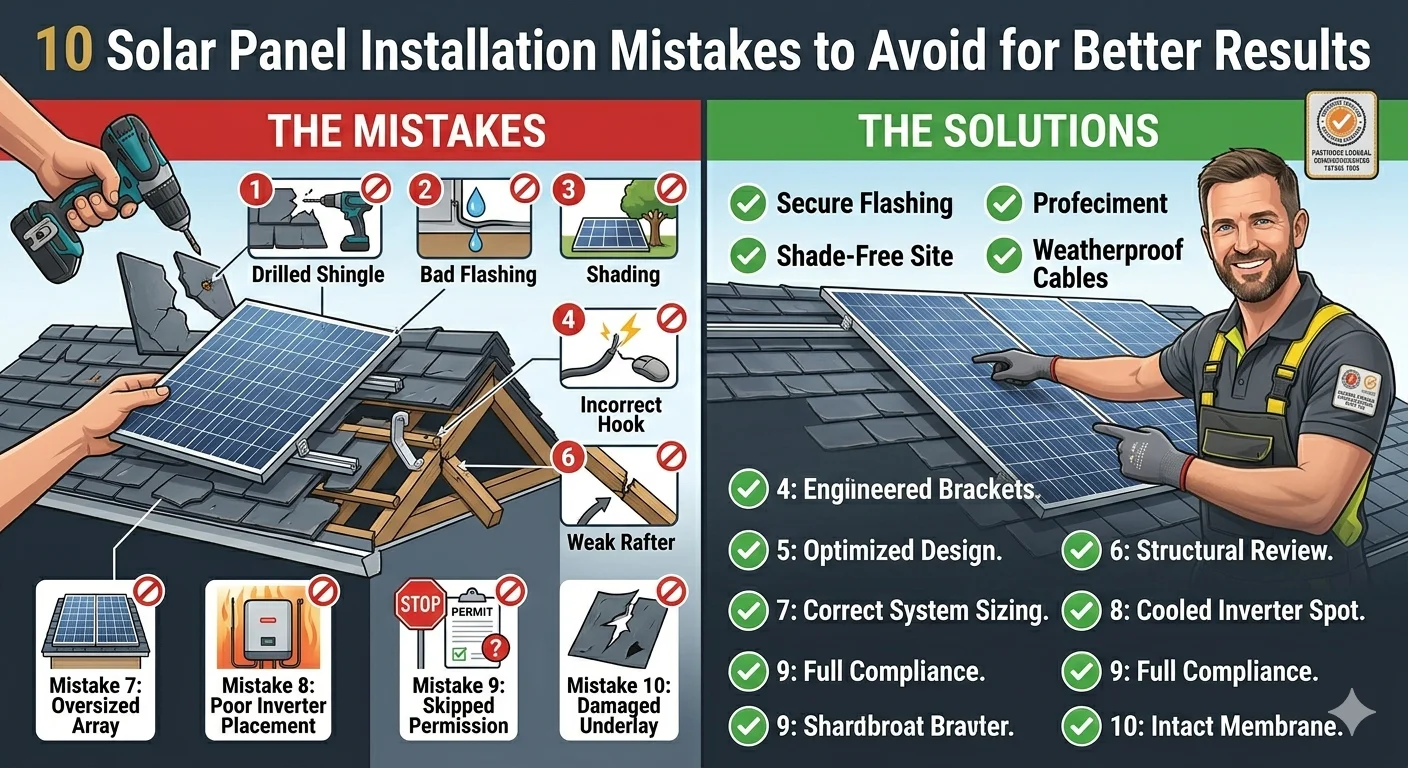
For tiled or slate roofs, the correct method involves carefully lifting the tiles and securing mounting hooks underneath, along with proper flashing to prevent water leaks. Cutting corners—like drilling directly through tiles—can cause serious issues, including moisture damage and weakened structure.

Flat Roofs
Flat roofs require a different setup. Instead of penetrating the surface, installers typically use ballasted systems. These are weighted frames that keep the panels secure without damaging the waterproof layer, making them a practical solution for this type of roof.
4. Structural Integrity: Can Your Roof Handle It?
Before moving forward with a solar panel installation, it’s important to confirm that your roof can safely support the added weight. Each panel typically weighs between 20–25 kg, and a complete system can add several hundred kilograms overall.
Key Checks Before Installation
- Inspect rafters for any signs of cracking or sagging
- Look for rot or water damage that could weaken the structure
- Make sure roofing materials are still in good condition

Addressing these factors early helps prevent costly repairs and ensures your system remains secure and reliable over time.
If your roof is aging, it’s often smarter to repair or replace it before proceeding with a solar panel installation. Removing panels later for repairs is costly and inconvenient.
5. Wind Resistance and Safety
It’s not only the weight of the system that matters—wind is another critical factor to consider. A properly executed solar panel installation must account for uplift forces, especially in areas prone to strong winds.
If panels aren’t secured correctly, they can act like sails and place stress on your roof structure. To prevent this, installers follow strict spacing guidelines, including leaving margins around roof edges. This reduces wind pressure and helps keep everything firmly in place.
A professional solar panel installation will always factor in local weather conditions and follow safety standards to ensure long-term durability.
6. Understand Your Energy Consumption
Before designing a system, it’s essential to understand how much electricity your household actually uses. This allows for a more accurate and efficient setup.
Basic Method
You can start by checking your annual energy usage in kilowatt-hours (kWh) on your utility bill.
Advanced Method
For a more detailed approach, some homeowners analyze half-hourly or hourly usage data. This gives a clearer picture of when energy is consumed throughout the day, helping installers tailor the system more precisely.
The better your usage is understood, the more effective your solar panel installation will be in meeting your needs.
7. Planning for Future Energy Needs
One common mistake is designing a system based only on current consumption. A smarter approach is to think ahead before committing to a solar panel installation.
Ask yourself:
- Are you planning to buy an electric vehicle?
- Will you switch to a heat pump?
- Are you considering adding high-energy features like a pool or hot tub?
Expanding later can be more expensive than installing a slightly larger system from the start. Planning ahead ensures your setup remains efficient and cost-effective in the long run.
8. The Role of Battery Storage
Battery storage is becoming an increasingly important part of modern solar setups. While panels generate electricity during the day, most households use more power in the evening.
Without storage, excess energy is often sent back to the grid instead of being used at home. Adding a battery to your solar panel installation allows you to store unused energy and use it when you need it most.
Why It Matters
- Store surplus energy for nighttime use
- Reduce reliance on the grid
- Provide backup power during outages
Including a battery can significantly improve the overall efficiency and value of your solar panel installation.
9. Smart Meters and Energy Tariffs
To fully benefit from your system, having a smart meter is highly recommended. It allows you to monitor both energy production and consumption in real time.
With smart integration, you can:
- Track how much electricity your system generates
- Take advantage of flexible or time-based tariffs
- Export excess energy back to the grid for potential savings
Without this technology, it’s harder to maximize the financial returns of your solar panel installation.
10. Electrical System Compatibility
Your home’s electrical setup must be ready to handle the addition of solar. Before installation begins, a thorough inspection is usually required.
Key Components to Check
- Main fuse capacity (typically around 100 amps is ideal)
- Condition of the consumer unit or fuse box
- Overall wiring safety and compliance with current standards
In some cases, upgrades may be necessary to ensure everything runs safely and efficiently alongside your solar panel installation.
Common Mistakes to Avoid
Even with careful planning, some homeowners make avoidable mistakes when going solar. These can affect performance, safety, and long-term savings.
Common issues include:
- Choosing the cheapest installer instead of the most qualified
- Overlooking shading problems
- Underestimating future energy needs
- Skipping structural checks
- Ignoring the benefits of battery storage
Avoiding these pitfalls helps ensure your solar panel installation performs as expected.
How to Choose the Right Installer
Not all installers offer the same level of quality, so choosing the right one is essential.
What to Look For
- Proven experience and a solid portfolio
- Detailed site inspection and assessment
- Clear and transparent system design
- Proper certifications and compliance with standards

A reliable installer will focus on long-term performance rather than rushing the job, ensuring your solar panel installation is built to last.
Final Thoughts: Make Your Investment Count
A carefully planned solar panel installation can significantly reduce energy costs while lowering your environmental impact. However, success depends on preparation and informed decision-making.
From evaluating your roof to understanding your energy habits and planning for the future, every step plays a role in the final outcome. Taking the time to do it right ensures your system delivers consistent, long-term value.
In the end, a well-executed solar panel installation isn’t just a home improvement—it’s a smart investment in efficiency, sustainability, and energy independence.